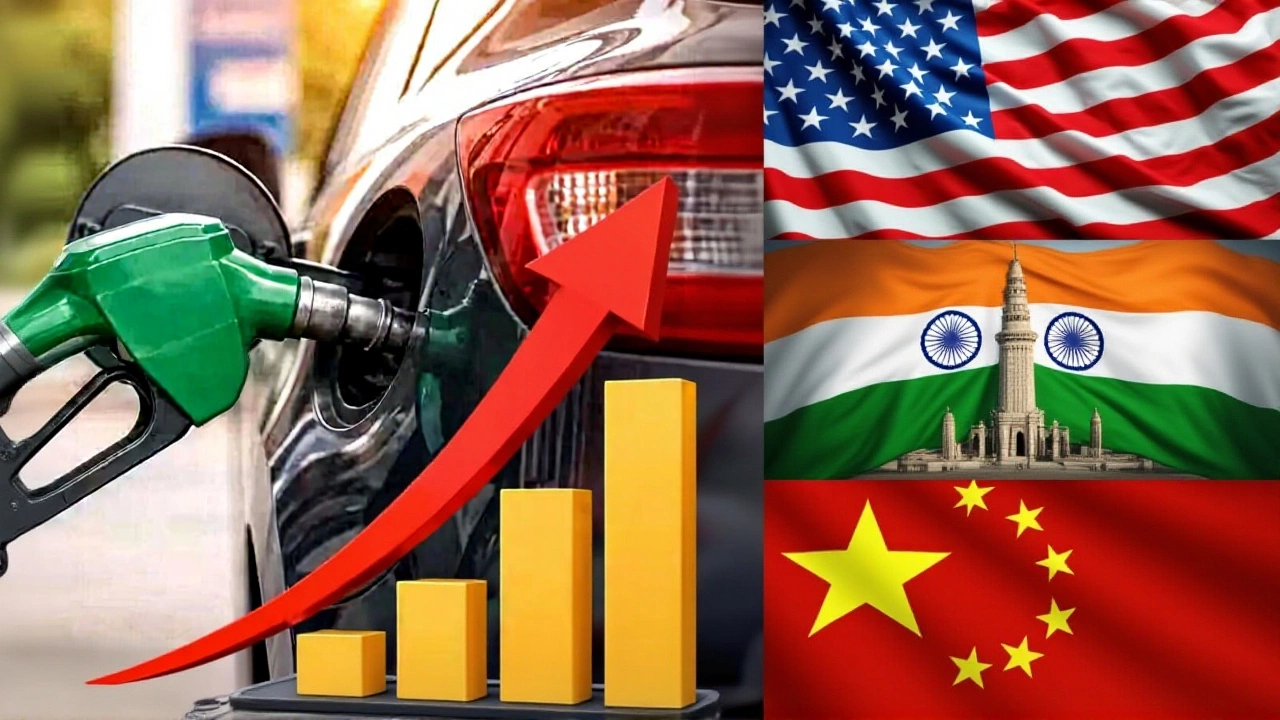
While drivers in the United States and the United Arab Emirates are watching their pump prices skyrocket by over 60%, Indian consumers remain largely unaffected. Despite a surge in international Brent Crude Oil prices driven by escalating tensions in the Middle East, petrol and diesel rates in India have remained frozen since January.
The stability is striking when you look at the numbers. In New Delhi, petrol sits at ₹94.77 per litre and diesel at ₹87.67 per litre, according to data from Indian Oil Corporation Limited. Meanwhile, just across the border in Pakistan, diesel has hit a staggering ₹520 per litre, triggering panic buying and long queues at fuel stations.
Here’s the thing: the world is currently holding its breath due to geopolitical instability near the Strait of Hormuz. This narrow waterway handles about 21% of the world's total oil consumption. When tensions rise here—specifically between Iran and Western powers—oil markets react instantly.
But the reaction isn't uniform. According to recent reports from DD News and other financial outlets, the impact varies wildly by region:
In contrast, countries like China and Brazil saw relatively modest increases, while Russia reported a negligible 1% rise in diesel prices. The disparity highlights how different nations manage—or fail to manage—their exposure to global commodity shocks.
The situation in Pakistan has become particularly acute. On April 3, 2026, the government announced another round of price hikes, adding PKR 26.77 per litre to existing rates. This wasn’t an isolated event; it was part of a cascading crisis.
By midnight that same day, petrol had reached PKR 458 per litre, and diesel touched PKR 520 per litre. The immediate result? Chaos. Video reports from the ground show kilometer-long queues at petrol pumps as citizens rush to fill up before prices potentially climb further. The Pakistani government cited fuel shortages and rising import costs as primary drivers, but the root cause remains the broader regional conflict involving the United States, Israel, and Iran.
This creates a stark contrast for Indian commuters. While our neighbors face inflationary pressure that threatens daily livelihoods, Indian households continue to pay stable rates. It’s a reminder of how policy decisions can insulate—or expose—a population to global economic tremors.

You might wonder why India hasn’t followed suit. The answer lies in the structure of India’s fuel pricing mechanism and strategic government policy.
Unlike many countries where fuel prices float freely with daily crude benchmarks, India employs a hybrid model. Public sector oil marketing companies (OMCs) like Bharat Petroleum, Indian Oil Corporation, and Hindustan Petroleum adjust prices based on a basket of average international prices over a period, rather than real-time spot rates. More importantly, the central and state governments often absorb excise duty changes to keep retail prices stable during periods of high volatility.
Essentially, the government is acting as a buffer. They’re taking the hit on margins to prevent inflation from spiraling out of control. If fuel prices spike, transportation costs rise, which pushes up the price of vegetables, electronics, and everything else. By keeping petrol and diesel steady, policymakers are trying to protect the broader economy from a shock that could otherwise trigger widespread consumer dissatisfaction.
The backdrop to all this is intense. Reports indicate that Iran claimed to have downed a US fighter jet near Qeshm Island, presenting video evidence to support the claim. Such incidents send shockwaves through energy markets because they threaten the free flow of oil through the Gulf.
The United Nations has urged an immediate ceasefire between the US, Israel, and Iran. Meanwhile, China has publicly blamed Washington and Jerusalem for the escalating crisis. These diplomatic maneuvers matter because they signal whether the conflict will remain contained or expand into a broader regional war. A full-scale disruption of the Strait of Hormuz would likely push Brent Crude well above $100 a barrel, making India’s current insulation strategy much harder to maintain.
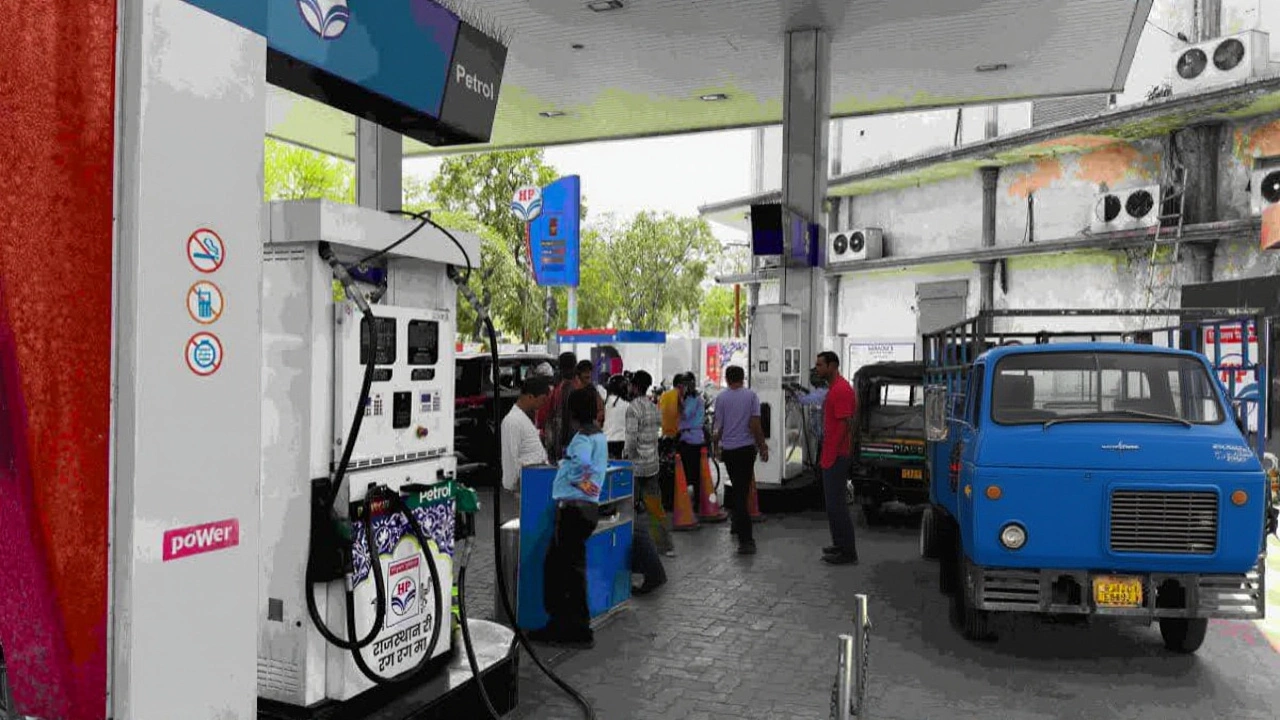
For now, Indian consumers can breathe easy. But experts warn that this stability may be temporary. If the Middle East conflict prolongs, or if supply chains are physically disrupted, the cost of imports will eventually force OMCs to pass on some of those costs.
Watch for these key indicators in the coming weeks:
Until then, the message from New Delhi is clear: stay calm, drive normally, and let the politicians handle the geopolitics. For now, your wallet is safe.
India uses a stabilized pricing mechanism where public sector oil companies adjust prices based on average international trends rather than daily spot rates. Additionally, the government often absorbs increases in excise duties to shield consumers from sudden inflation, maintaining political and economic stability.
As of April 3, 2026, Pakistan saw petrol prices reach PKR 458 per litre and diesel hit PKR 520 per litre. This represents a cumulative increase of approximately 43% for petrol and 55% for diesel compared to previous stable periods, causing significant public unrest and long queues at fuel stations.
According to Indian Oil Corporation Limited data, petrol in New Delhi is priced at ₹94.77 per litre, and diesel is at ₹87.67 per litre. These rates have remained unchanged since January, reflecting the government's effort to maintain price stability amidst global volatility.
The Strait of Hormuz is a critical chokepoint through which roughly 21% of the world's oil passes. Any threat to its security, such as military tensions between Iran and Western nations, causes fear of supply disruptions. This fear drives up the price of Brent Crude Oil globally, which in turn raises retail fuel costs in importing countries.
It depends on the duration of the Middle East conflict. If Brent Crude prices remain elevated above $95-100 per barrel for an extended period, the government may struggle to subsidize the difference indefinitely. However, short-term spikes are usually absorbed by oil marketing companies to avoid immediate consumer backlash.